
Acequia

noun | part of encyclopedia/culture
Pronounced: \uh-seh-key-yuh\
IPA: /əˌsɛˈkiə/
Plural: acequias
Definition of acequia
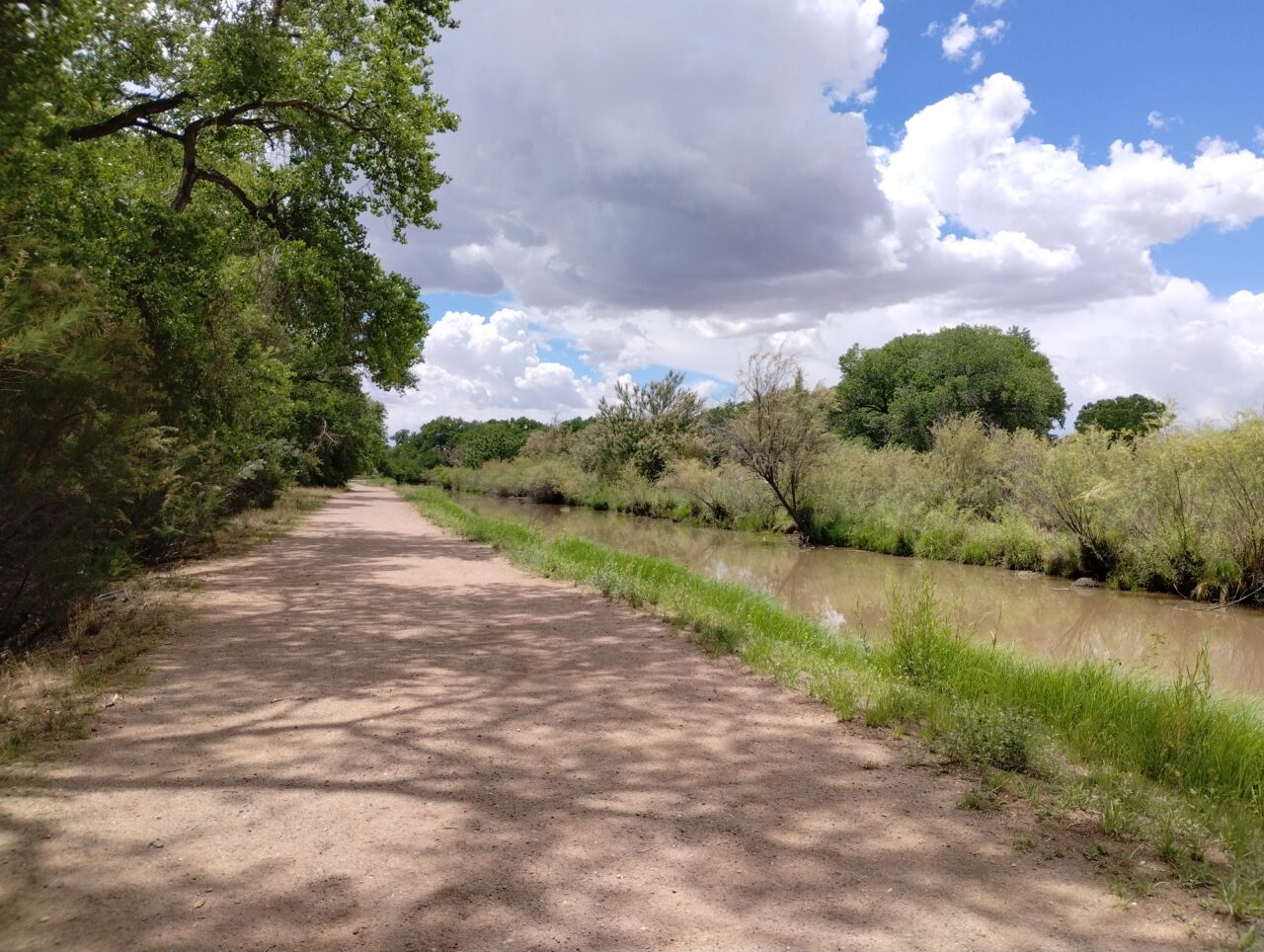
- A community-based irrigation canal or ditch system, recognized under New Mexico law as a political subdivision of the state (in which owners of water rights govern the neighborhood ditches). Typically consisting of a main channel (acequia madre) fed by a river or stream, with lateral branches (sangrías) distributing water to fields, orchards, and pastures. With emblematic hallmarks of the agricultural traditions reflecting the indigenous, New Mexican, and pioneer heritage of the region. Acequias serve as focal points for community water sharing and maintenance events (often called the spring limpia).
Example of acequia
Origin of acequia
The term “acequia” originates from Spanish, derived from Andalusi Arabic as-sāqiya (“water conduit; irrigation channel; water-lifting device”), which traces to Classical Arabic sāqiya and the ancient Semitic root √s-q-y meaning “to give drink” or “irrigate.” Cognates include Biblical Hebrew šāqâ (“to give drink, water”) and Aramaic/Syriac forms, reflecting a reconstructed Proto-Semitic root that preserves deep Near Eastern agricultural vocabulary embedded in everyday subsistence life.
Though its etymology has roots in the Old World, it bears little similarity to the one in old Spain. In fact, in the Southwestern United States, it has roots in both the farming traditions of riverside Puebloan and Hispano peoples in historic Nuevo México. They are a distinct tradition, and can be found all along the Rio Grande, and other rivers in the Southwestern United States. New Mexico acequias remain unique in their earthen channels alongside broad walking trails. They operate as farmer and rancher groups where parciantes elect a mayordomo in one-property-one-vote assemblies, calling out the communal limpia each spring. Protecte across national, state, and local governance, these ditches endure as living herencia, carrying snowmelt and shared meals. Some acequias date back to 1710 and earlier, they continue to receive support for rehabilitation through programs like those of the U.S. Army Corps of Engineers, the New Mexico Interstate Stream Commission, the New Mexico Acequia Association, all the way down to local mayordomos and comisionados.
First Known Use: 17th century (in New Mexican Spanish), 19th century (in New Mexican English).
